
Small or Narrow Palate Treatment in Wagga Wagga
A narrow upper jaw leaves too little room for teeth to sit straight - and can affect breathing and sleep. For families across Wagga Wagga and the Riverina, an early assessment makes it very treatable.
What a Small or Palate Actually Means
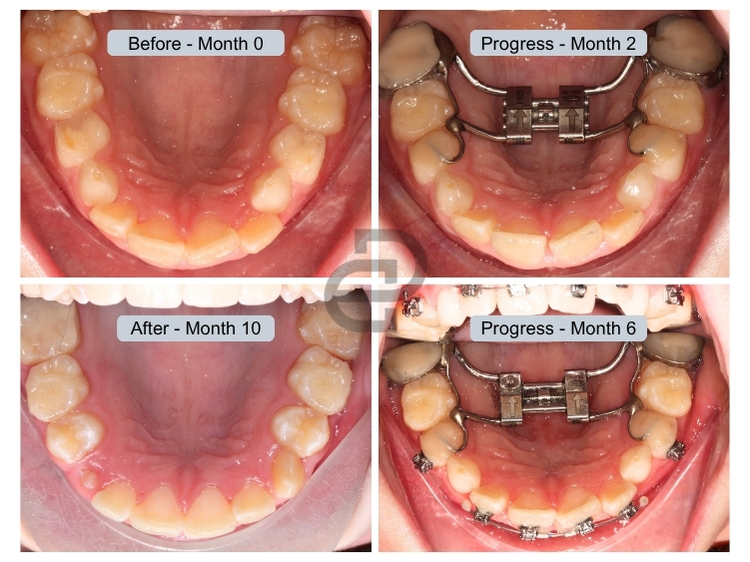
The palate is the roof of the mouth — the foundation your child’s upper teeth grow from. When the upper jaw develops too narrow, it becomes high and V-shaped instead of broad and rounded, leaving too little room.
Adult teeth crowd or come through crooked, the bite can slip inside (a crossbite), and nose breathing gets harder – which is often why parents notice mouth breathing or snoring first.
The reassuring part: it’s common, it’s no one’s fault, and in young children it’s very fixable. While the jaw is still growing, a palate expander widens it gently – no surgery – and our Wagga Wagga dentists check for it at a normal kids’ check-up.
Signs To Look For In Your Child
Some you'll spot at home; others a dentist notices at a check-up. Your child doesn't need all of them for it to be worth a look.
In The Mouth
- Crowded, overlapping or twisted teeth
- A high, deep, or V-shaped roof of the mouth
- Upper teeth biting inside the lower teeth (crossbite)
- Teeth erupting out of line or "blocked out"
- Not enough room for teeth to come through
- Difficulty cleaning between tightly packed teeth
Everyday Signs At Home
- Breathing through the mouth, day or night
- Snoring, restless sleep or grinding at night
- Waking tired, or a dry mouth in the morning
- A constantly blocked or runny nose
- Lips apart at rest, tongue sitting low
- Dummy or thumb-sucking that continued past age 3
What Causes the Jaw to Narrow?
Usually it’s a mix of genetics and how the jaw was used as it grew. The tongue is meant to sit against the palate and shape it outward – so anything that keeps the mouth open or the tongue low can leave the arch underdeveloped.
- Genetics & family history - a naturally smaller jaw shape can run in families.
- Mouth breathing - often from allergies, congestion or enlarged tonsils/adenoids.
- Prolonged dummy, thumb or finger sucking - sustained pressure past toddler years.
- Low tongue posture - the palate misses the outward shaping the tongue provides.
- Restricted tongue movement - e.g. a tongue-tie limiting normal resting position.
Ages 7-9 are the ideal time for a first check
Australian and international guidance suggests every child have an orthodontic assessment around age 7. Enough adult teeth are through to spot a narrow jaw, and the growth line is wide open — so if expansion is needed, it’s at its simplest. Noticed crowding, mouth breathing or snoring? It’s worth a look now rather than waiting for all the adult teeth.
Ready to get started? Speak to our friendly team at your next visit, or call us today to find out more.
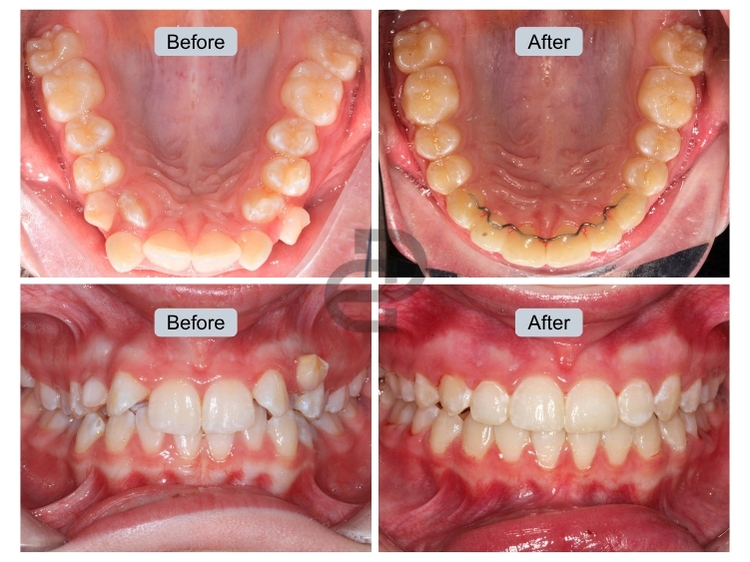
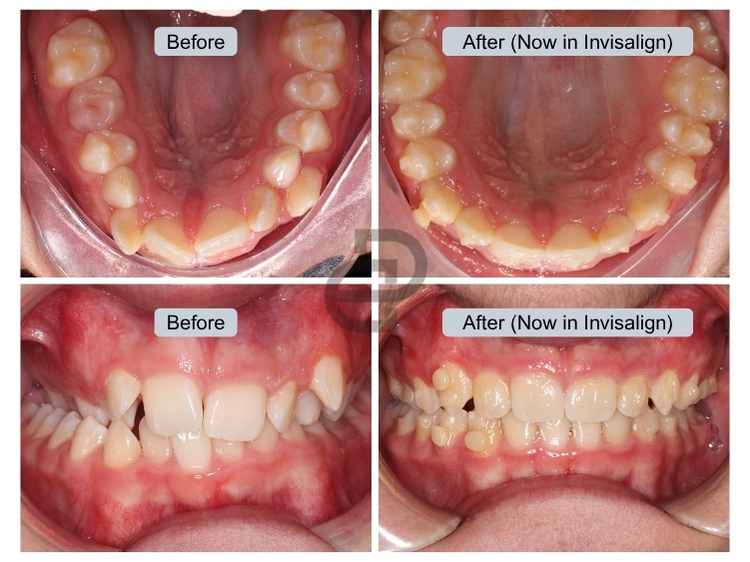
Our Palatal Expansion (Phase 1) Results
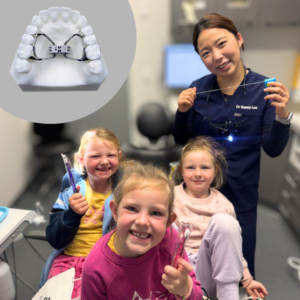
The Process of Getting Palatal Expansion
What To Expect Step by Step
Step 1: Consultation & assessment
One of our dentists will examine your child’s teeth, jaw and bite, and take X-rays and a digital scan. We look at how your child is growing to decide whether Phase 1 treatment is needed, and if so, the best time to start and the right plan for them.
Step 2: Fitting the expander
We fit a custom-made palatal expander to the upper teeth. At home, you’ll gently turn the expander with a small key as instructed, which slowly and safely widens the upper jaw to create space. Fitting the expander is comfortable and pain-free.
Step 3: Aligning & retaining
Once we’ve created enough space, we usually use partial braces or aligners to move the teeth into the right positions – including guiding the canine teeth, which are often the trickiest. When everything’s in place, a retainer holds the results and protects the work we’ve done.
Interest-Free Payment Plans
We understand that dental care is a significant investment and we don’t want cost to stand between you and a healthy smile. At Elevate Dental Wagga Wagga, we offer in-house, interest-free payment plans, set up for you on the spot, so you can get the treatment you need and pay for it in a way that suits your budget.
✓ Interest-Free & No Credit Checks
✓ Payment Plans Up to 24 Months
✓ Covers Treatments Up to $10,000
✓ We Will Help Set Up in 15 min
Ready to get started? Speak to our friendly team at your next visit, or call us today to find out more.

FAQs
It’s normal to feel some gentle pressure in the first few days – that just means the expander is doing its job. Most children adjust within a few days and are soon back to their normal routine.
Phase 1 treatment usually takes 10-14 months. The exact length depends on your child’s age, growth and the issues being treated.
It depends on how your child’s adult teeth come through. Many children do go on to braces or Invisalign later – and most teens choose Invisalign/Clear Aligners at this stage. Because the more complex work has already been done in Phase 1, this later phase is usually just rotating and tidying up the adult teeth as they finish coming through.
And if you choose to do Phase 2 with us after completing Phase 1, we offer it at a significantly reduced fee.
Every child’s treatment is a little different, so the cost varies – but Phase 1 is usually in the range of $4,000–$6,000. After the assessment we’ll give you a clear quote with no surprises, and we’re happy to set up a payment plan. We also accept most health funds.
Brush after meals, floss daily, and avoid hard or sticky foods. Some soreness after adjustments is normal. Use wax for any rubbing, and wear a mouthguard for sport.
You’ll need to wear retainers—either removable or fixed—to keep your teeth in place. Regular check-ups help maintain your new smile.